Some objects belong to the table; a very few belong to legend. Marie-Antoinette’s breast bowl, a piece of Sèvres porcelain made in 1787 for the queen’s dairy at Rambouillet, does both. Thought lost for two centuries, it turned up in a crate during the inventory of a Paris gallery, and on Thursday 26 November at 6pm it goes under the hammer at Hôtel Drouot, estimated at €1 million to €2 million.
The sale is handled by Coutau-Bégarie & Associés as part of the dispersal of the Galerie Meyer collection, where the bowl appears as lot 8, with ceramics expert Cyrille Froissart. Its official name is more discreet than its nickname: a jatte téton with its tripod, “from the Laiterie de Rambouillet”.
A dairy made for a queen
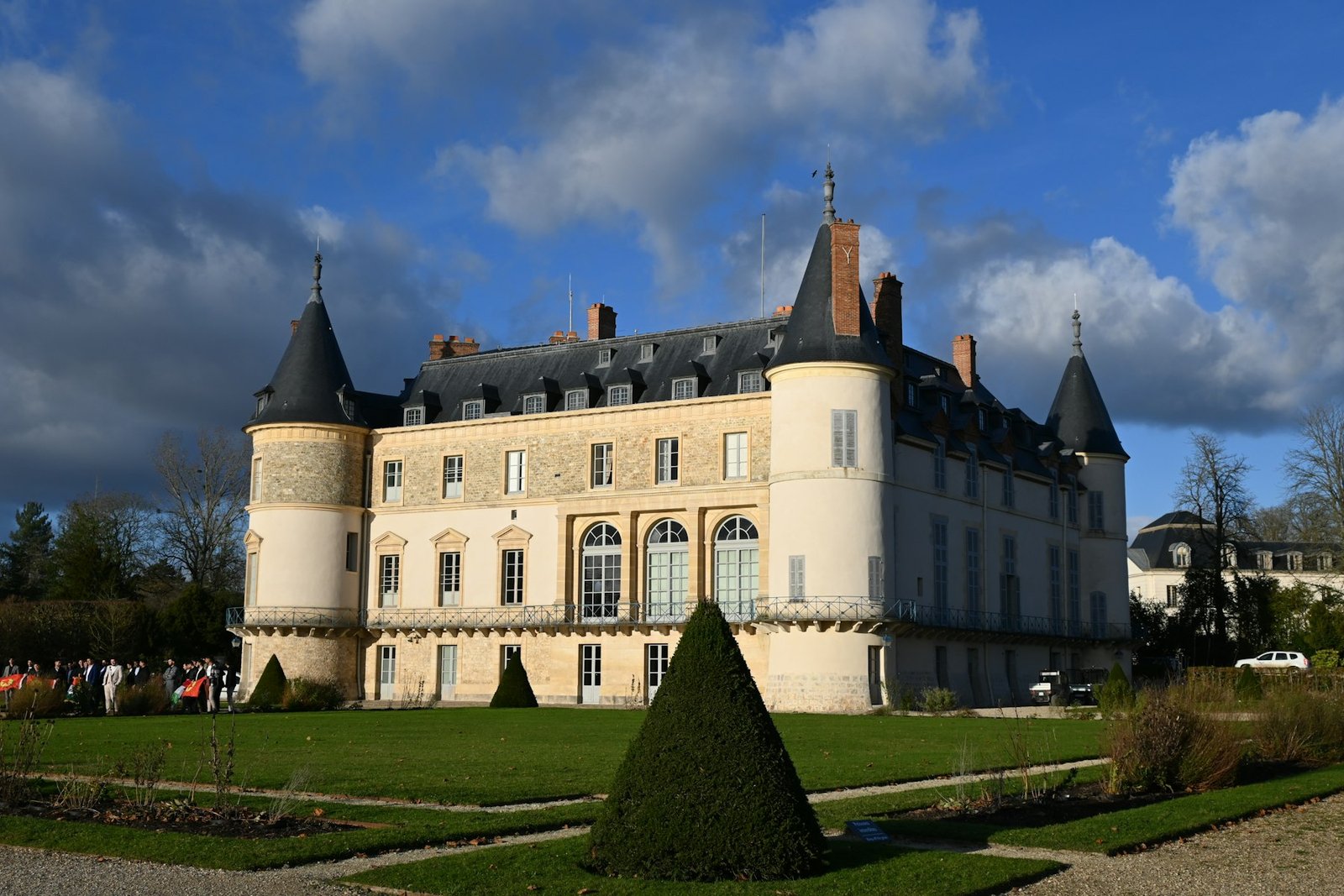
Louis XVI bought the Rambouillet estate in 1783 and commissioned a dairy for Marie-Antoinette, a neoclassical retreat where milk was to be tasted rather than churned. The project gathered the great names of the day, among them the painter Hubert Robert, and the royal manufactory at Sèvres was asked for a complete service to match.
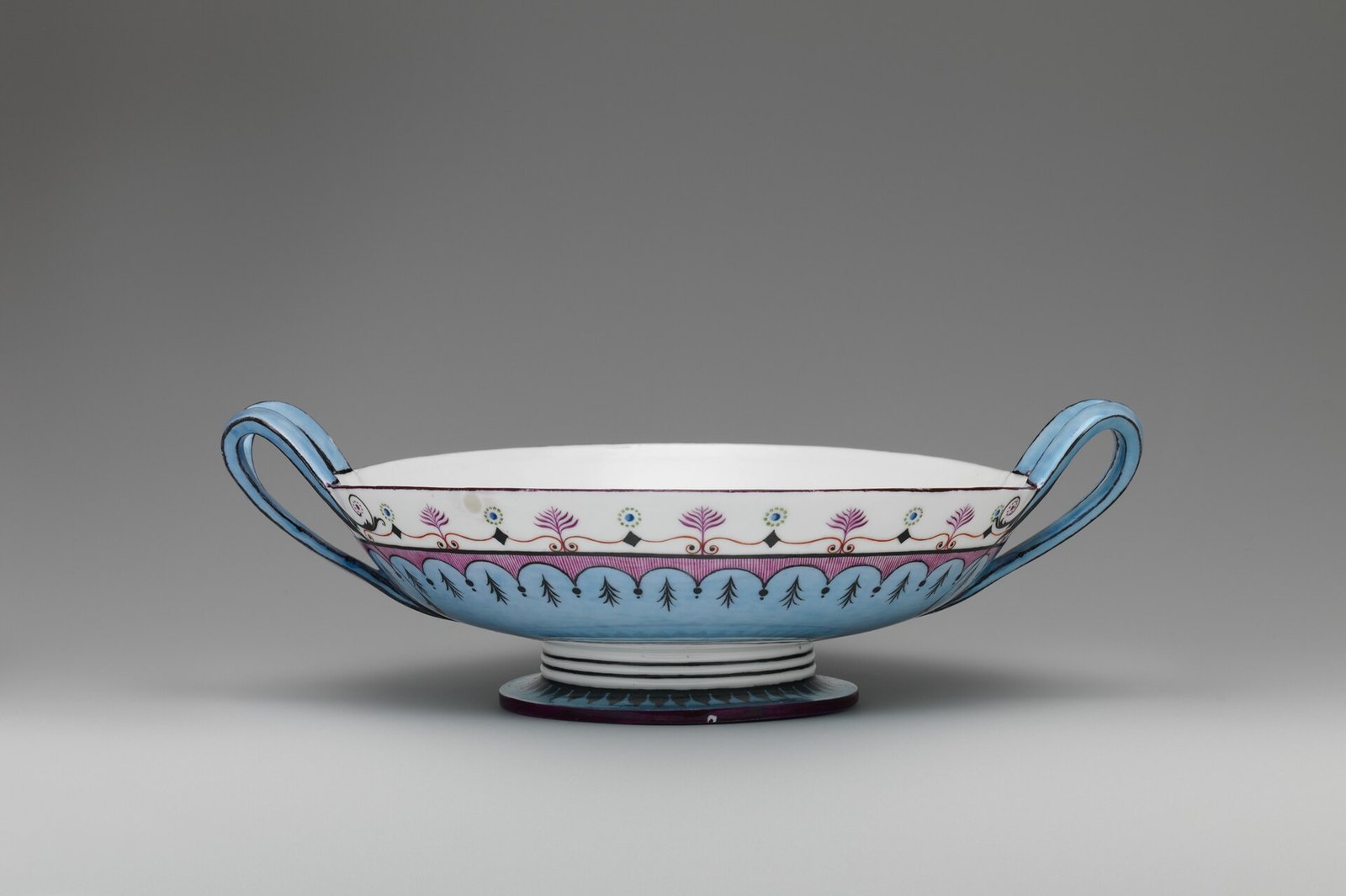
The bowl is pure Enlightenment fantasy. A cup in soft-paste porcelain, modelled as a breast with a painted nipple, sits on a hard-paste tripod resting on three goat heads in relief. The decoration, in black and purple, runs in Etruscan-style scrolls, ovolos and arrows over an ochre ground the Sèvres archives call fond grès. There is no gilding at all: the shape draws on the mastos, a breast-shaped drinking cup of ancient Greece, and the whole piece speaks the sober, archaeological language that was then fashionable in Paris.
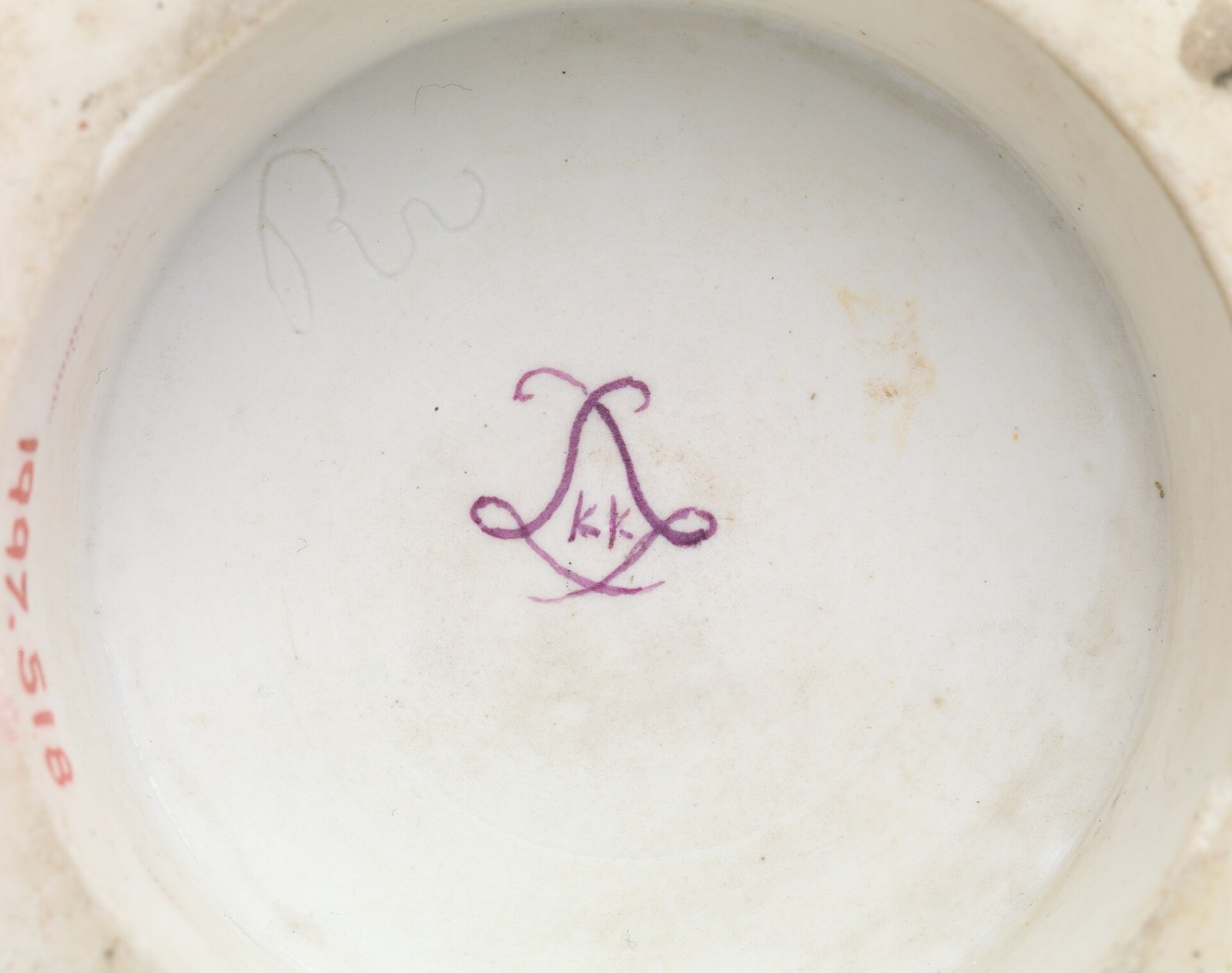
Under the tripod, the marks tell the rest: the crowned interlaced Ls of the royal manufactory and the date letters KK, for 1787. The piece stands 12 centimetres high.
Marie-Antoinette’s breast bowl: legend and history
For two hundred years, a rumour has followed these bowls: that they were moulded on the queen’s own breast. Every source covering the sale treats it as an unproven legend. The catalogue, as The Art Newspaper France points out, even adds a wry footnote, quoting a bust measurement taken from the account book of the queen’s dressmaker.
The irony is sharper still. According to Beaux Arts Magazine, Marie-Antoinette never really enjoyed her dairy: the works were only completed in 1788, two years after her last visit to Rambouillet.
Four such bowls were made. Three are in public collections, two at the national ceramics museum in Sèvres and one at the Museo Duca di Martina in Naples. The ochre example offered at Drouot is the only one left in private hands. A manuscript cited by the auction house traces it to the marquise de Chanaleilles, then to her grandson, General Ferdinand de Salles, before it entered the stock of Galerie Meyer. Coverage of the rediscovery began in late October with Connaissance des Arts, before the bowl went on show this week.
Before the hammer falls
For anyone who loves the art of the table, Drouot is the place to be. The bowl is on public view in Room 4, 9 rue Drouot, on Wednesday 25 November from 11am to 6pm and on Thursday 26 November from 11am to 4pm, a few hours before the sale. Part of the proceeds will go to Ruban Rose, the breast cancer association whose cause STAMPMAG followed with The Peninsula Paris this autumn. Collectors who followed the Blaquier Van Gogh sale will recognise the season’s mood: Paris treasures, rediscovered, and sought after the world over.
Whatever the final price, the object itself is the lesson. A bowl for milk, made for a queen who barely used it, now brings the porcelain of the royal court back to a Parisian auction room.
Sources
- Coutau-Bégarie & Associés — lot 8, sale catalogue — sale of 26 November 2026
- Coutau-Bégarie & Associés — Collection Galerie Meyer, sale information — sale of 26 November 2026
- Beaux Arts Magazine — 23 November 2026
- The Art Newspaper France — 23 November 2026
- Toutes les Box — 24 November 2026
- Paris Match — 13 November 2026
- Connaissance des Arts — 28 October 2026
- The Metropolitan Museum of Art — Bowl from the Rambouillet service — collection page
Cover photo: Photo: The Metropolitan Museum of Art, New York — CC0, via Wikimedia Commons